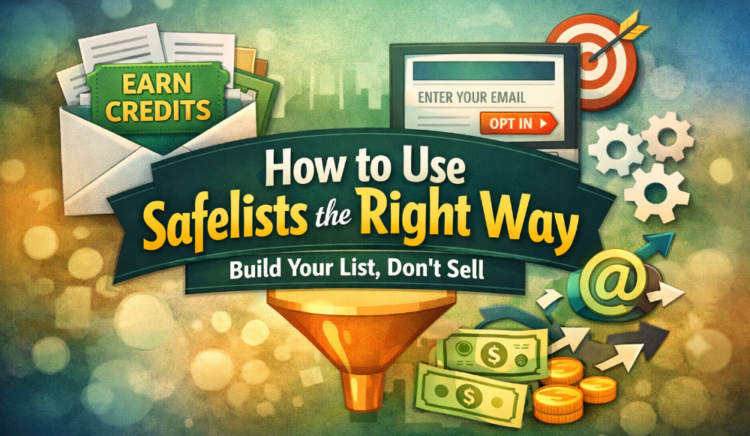
Most people who use safelists are trying to make quick affiliate commissions. They log in, click emails, send out their own promotions, and hope something sticks. Sometimes they get a result, but more often they don’t. After a while, many of them decide that safelists simply do not work.
I don’t think that is the real issue.
The problem is not the platform. It is the way the platform is being used.
Here’s the thing: Safelists are not designed to close sales on cold traffic. The people reading your emails are usually other marketers who are clicking through quickly to earn credits. Their attention is limited. If you send them straight to an offer and expect a sale, you are asking too much too soon.
What Safelists Are Good At Delivering
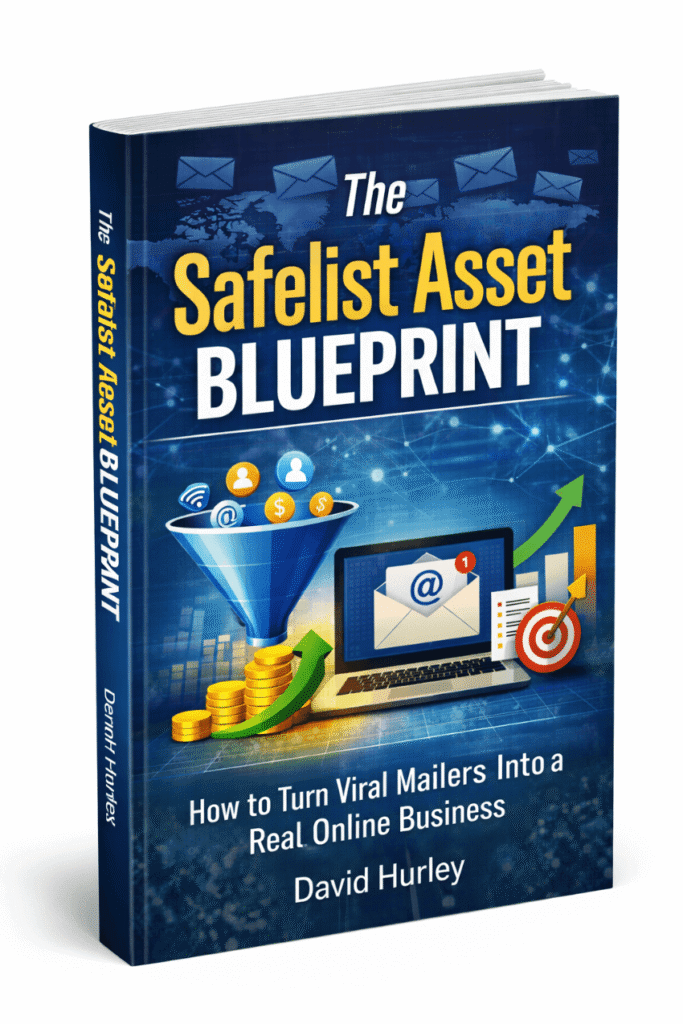
Safelists are very good at one thing; they generate steady exposure. Used properly, that steady exposure becomes something you can build on. (To be clear, we are talking about well-run safelists with dedicated owners and a growing number of active subscribers.)
That is the thinking behind the Safelist Asset Blueprint, which you can download here for free.
Instead of sending traffic directly to affiliate links, the idea is to send that traffic to your own lead capture page. From there, you build your own mailing list. That list becomes something you control. You can follow up, build familiarity, and introduce offers over time in a way that makes sense.
This is not a new idea, but it is often ignored in the safelist space. Many people are focused on immediate results rather than long-term assets. The result is a lot of activity with very little to show for it.
When you shift your focus to building your list, the whole process changes. You are no longer relying on a single click to produce a sale. You are building a relationship. Over time, the relationships you build through your email follow-up will deliver better results.
Continue reading “Why Most Safelist Users Never Build a Real Business”